Contract
Redesign
A dense legal document redesigned into a clear, accessible four-page format — with a custom icon set developed to fit within an existing design system.
The Problem
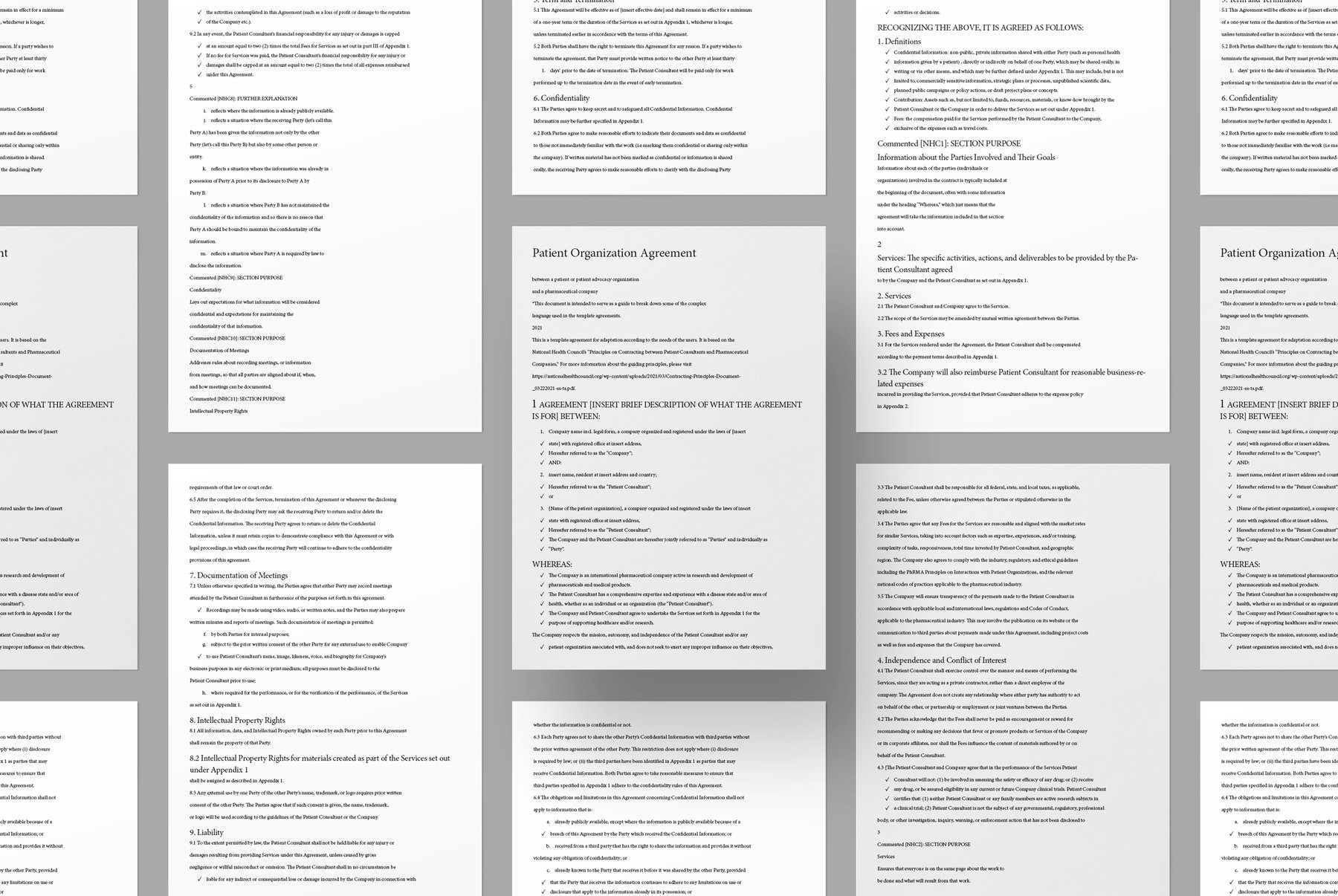
The source material was a legal contract — the kind of document that legal teams produce for legal teams. Dense, unformatted, running to many pages, written in language that assumed professional legal literacy. The problem was that this contract needed to be understood and signed by patient organizations: charities and advocacy groups whose representatives are not, in the main, lawyers.
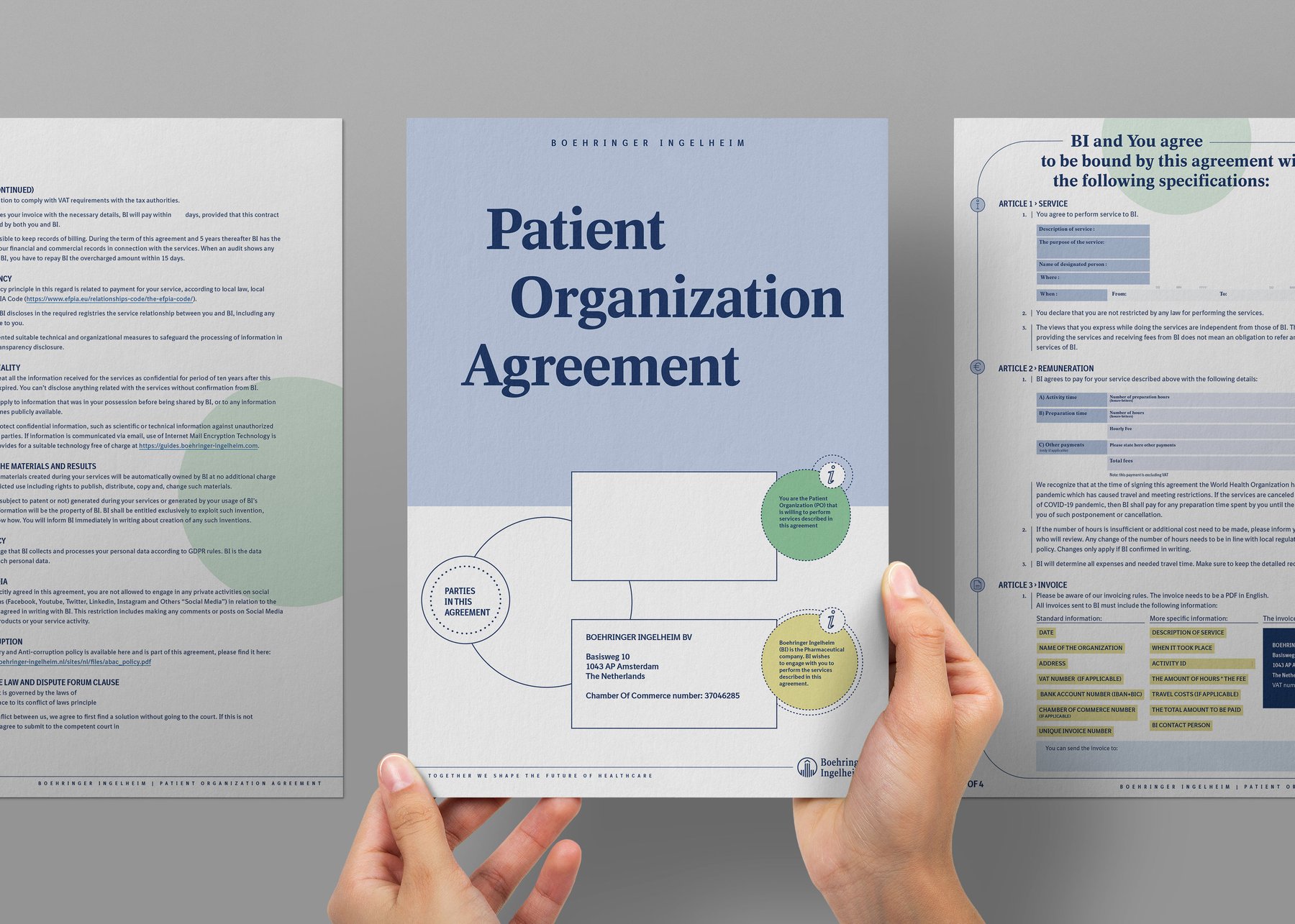
The brief was to translate the document into something a non-legal reader could actually navigate — without losing legal precision, and without removing anything that needed to stay. The project was a three-way collaboration: legal representatives, patient organization representatives, and design.
The Approach
The core design decision was compression: restructuring a document that ran to many pages into four pages — a title page naming the parties, two pages holding all the contractual information, and a signature page. This meant working closely with the legal text — not simplifying what could not be simplified, but using visual hierarchy to guide the reader through clauses in order of importance.
A custom icon set was developed to support navigation and section identification. The icons were designed to integrate with the existing design system already in use across the program — consistent in weight, style, and intent with the iconography already in place, rather than introducing a second visual language into materials the reader would already be familiar with.
The Result
The finished document held the legal content intact while being navigable by a reader without a legal background. The structure, typography, and iconography did the work — turning a compliance requirement into a clear communication.
This project sits at the intersection of information design and stakeholder management. Getting three parties with different literacy levels and different priorities to sign off on a single designed document required as much process thinking as visual thinking.