Nurse
Connect
A dual-audience print suite for people living with IPF — separate design directions for nurses and patients, executed across twelve documents.
The Brief
Nurse Connect was a patient support program for people living with IPF — idiopathic pulmonary fibrosis, a progressive lung condition with limited treatment options. The program connected patients with specialist nurses, giving them a direct point of contact throughout their care journey.
The challenge was a genuinely dual-audience brief: the same program needed to communicate clearly with nurses (clinical, confident, efficient) and with patients (warm, accessible, reassuring). Two distinct design directions, developed in parallel, across a suite of twelve documents. I joined the project mid-stream — the ideation phase was already complete — and hit the ground running to execute the full suite within the established direction.
Two Audiences, Two Directions
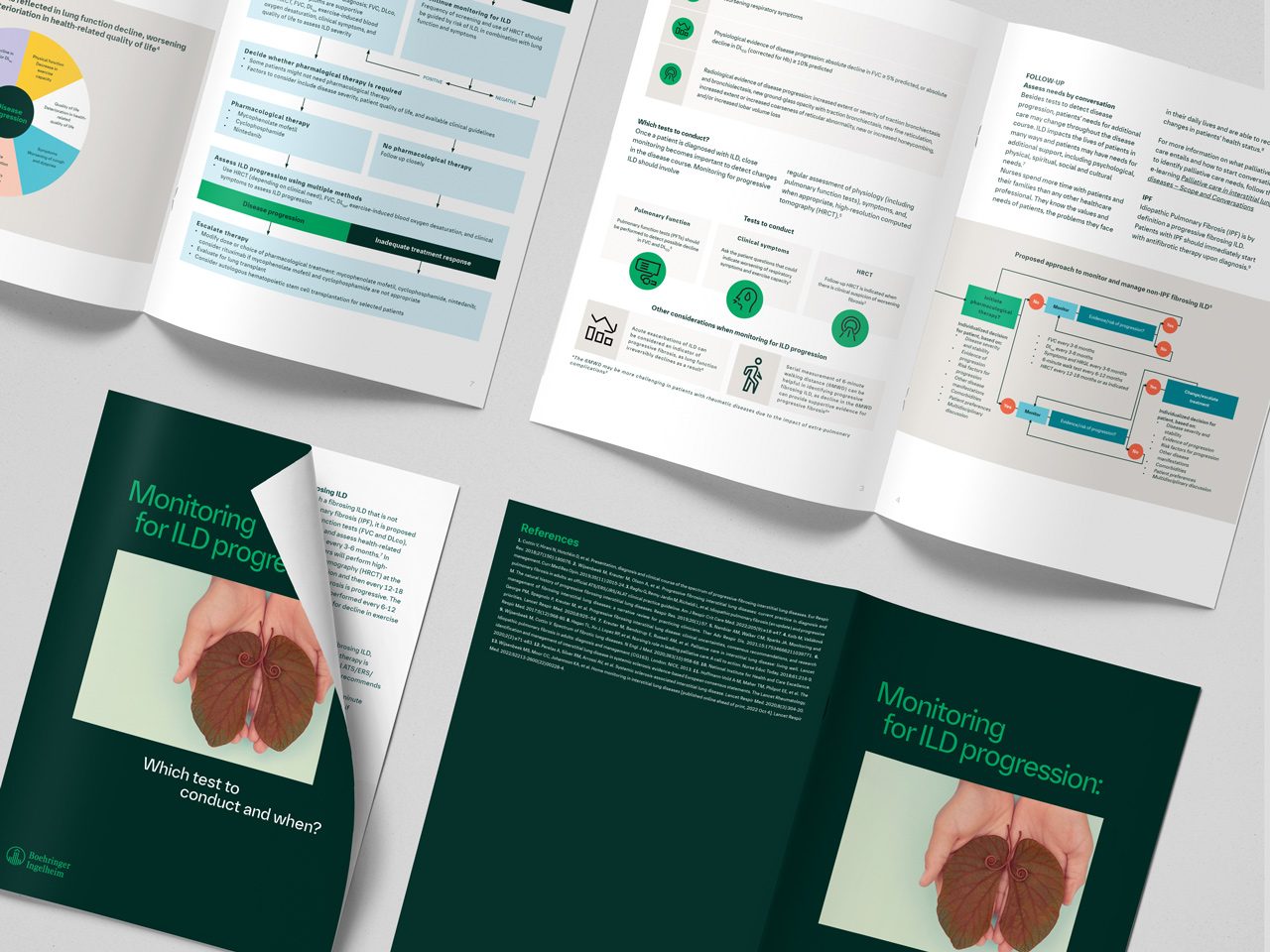
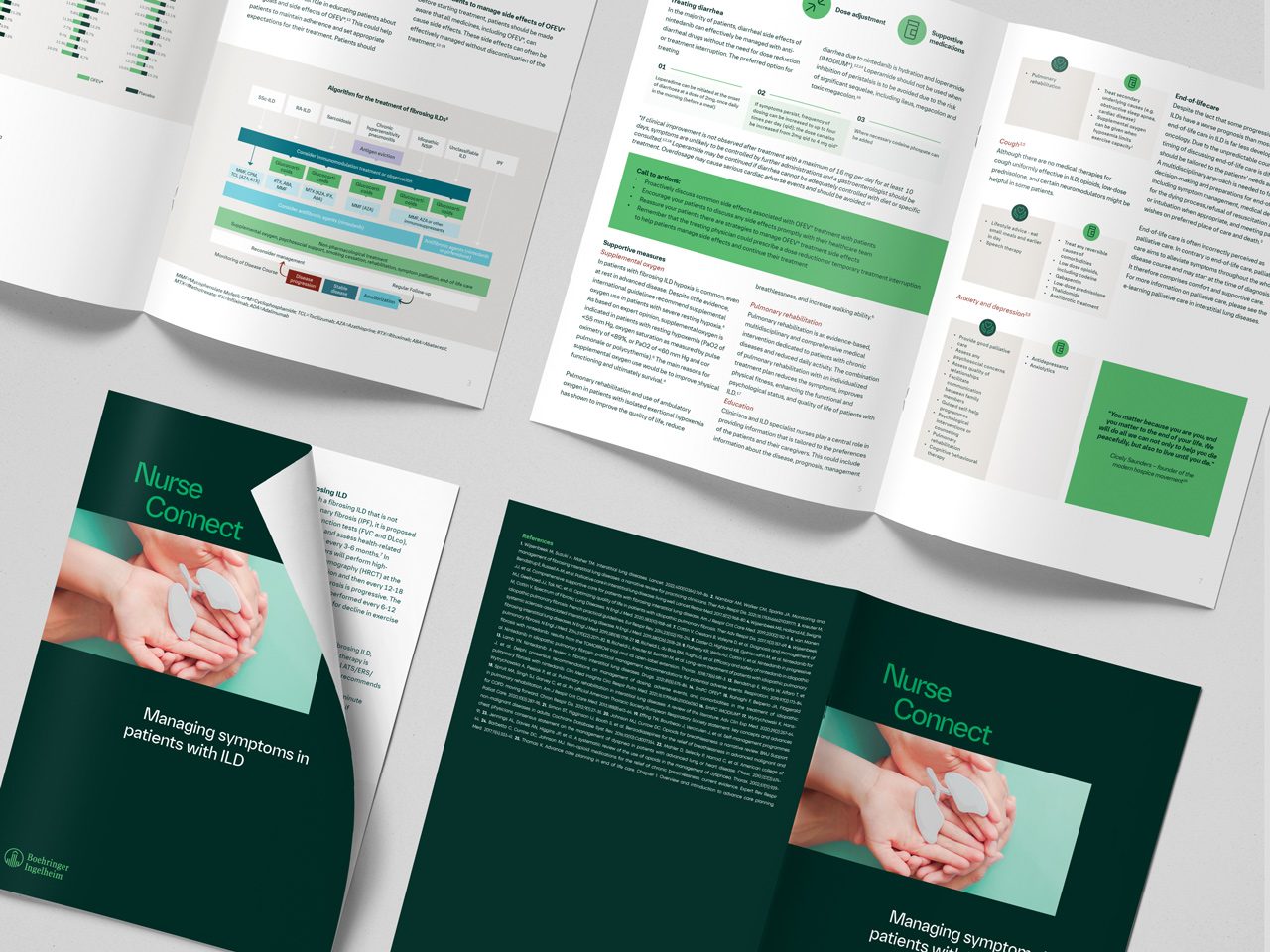
The nurse-facing materials needed to earn trust quickly. Nurses work under time pressure and expect clinical materials to be dense, scannable, and precise. The design reflects this — clean layout, structured typography, and a functional tone that respects the reader's expertise.
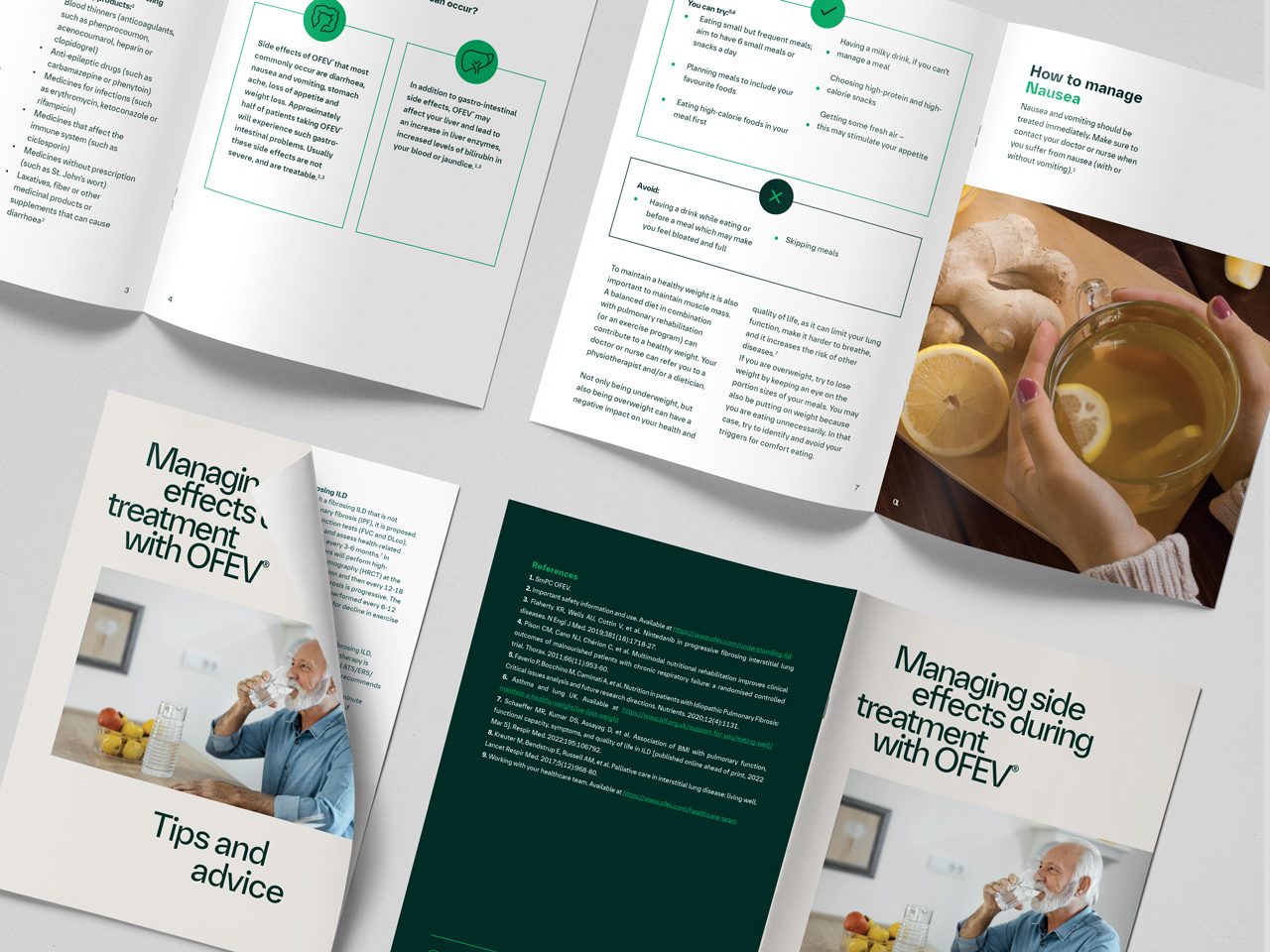
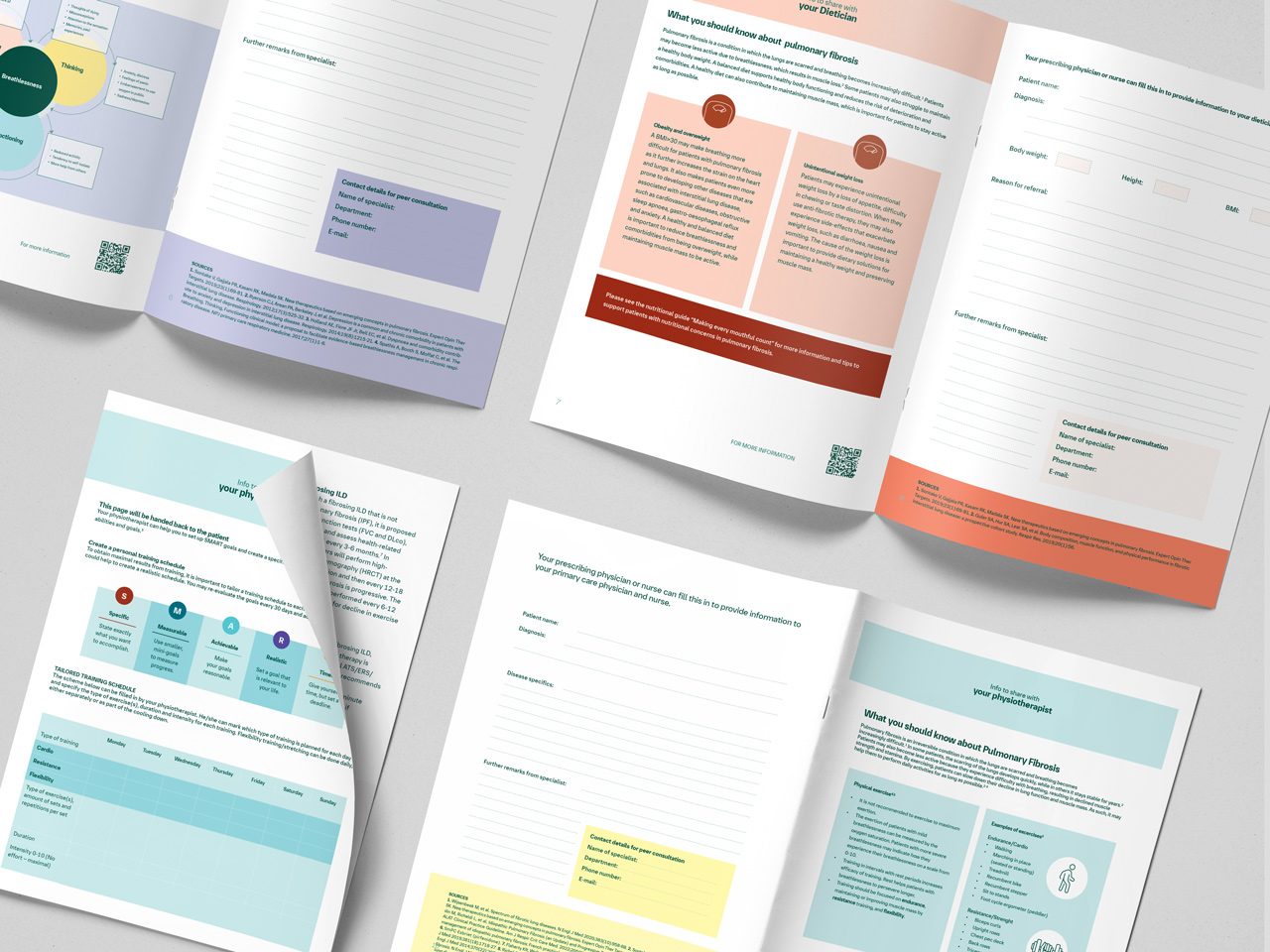
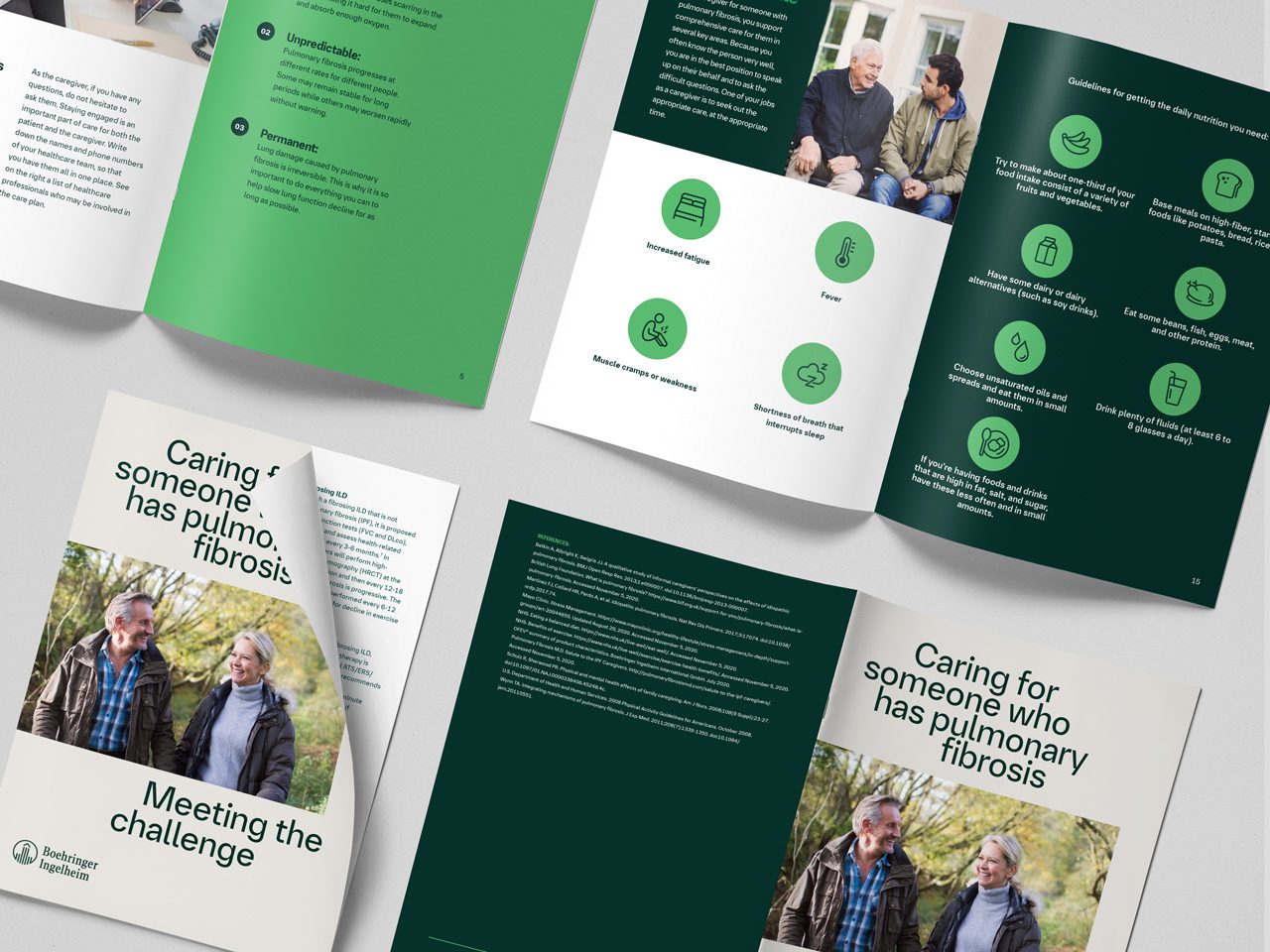
The patient-facing materials asked something different. For someone navigating a serious diagnosis, the design needed to feel human. Softer, more open layouts, friendlier type treatment, and a visual language that communicated support without being patronizing. The difference in register between the two directions is the core design decision of this project.

Executing at Scale
Twelve documents across two design systems — guides, trackers, reference cards, patient diaries, and communication templates. Joining mid-project meant working from established foundations and maintaining consistency across a large body of work without the benefit of having shaped those foundations myself.
The output was a coherent print suite that held together as a program — not twelve separate pieces, but a unified communication system that patients and nurses would encounter together over time.